

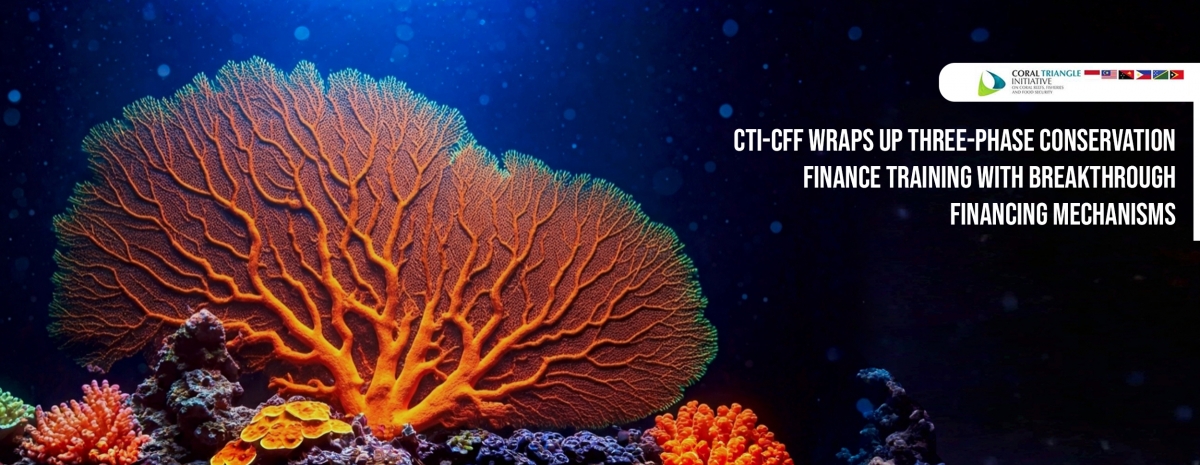
CTI-CFF Wraps Up Three-Phase Conservation Finance Training with Breakthrough Financing Mechanisms
PRESS RELEASE
CTI-CFF Wraps Up Three-Phase Conservation Finance Training with Breakthrough Financing Mechanisms
Wednesday, 10 September 2025
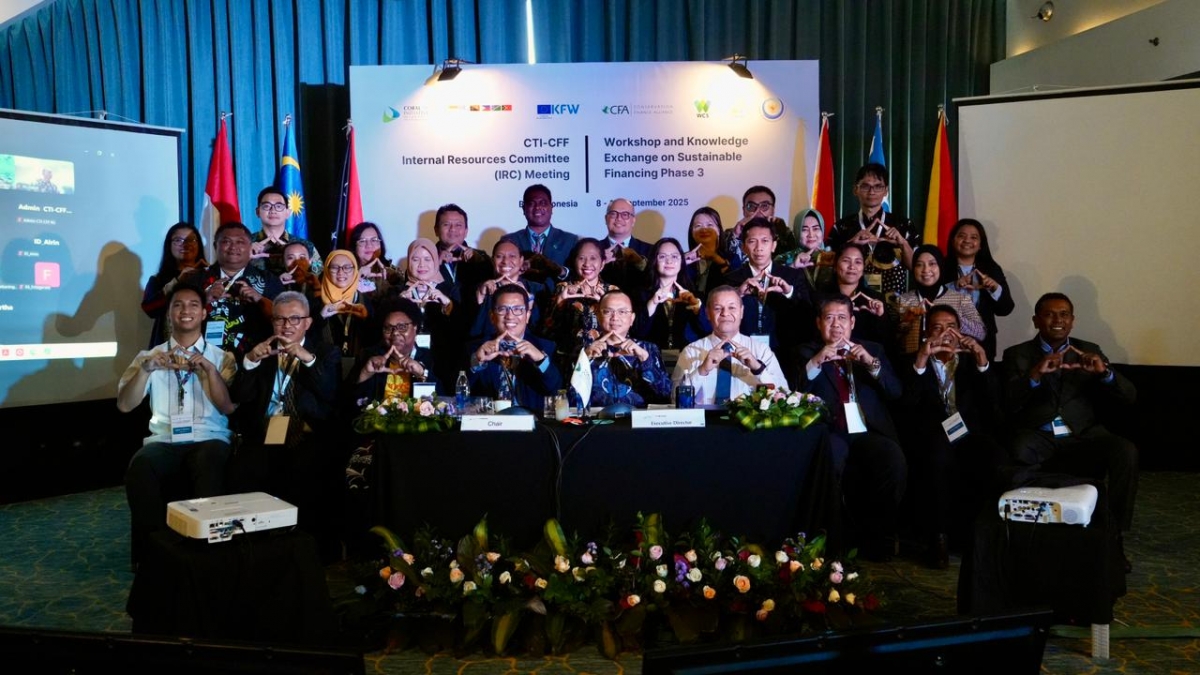
The Coral Triangle Initiative on Coral Reefs, Fisheries, and Food Security (CTI-CFF) successfully convened the third and final phase of the Workshop and Knowledge Exchange on Sustainable Financing in Bali, Indonesia, from 8–12 September 2025. Held back-to-back with the CTI-CFF Internal Resources Committee (IRC) Meeting, the event marked a significant milestone in advancing long-term financing solutions for marine conservation and sustainable development across the Coral Triangle region.
Co-funded by the Wildlife Conservation Society (WCS) and Rare, the workshop reflected the strong collaboration between CTI-CFF and its strategic partners in promoting sustainable ocean solutions.
“This workshop series is a powerful example of how regional collaboration and targeted capacity building can lead to real, actionable progress,” said Ms. Valerie Kuan, Finance Manager, Singapore SEAA, WCS. “We’re proud to support CTI-CFF and its member countries as they pioneer innovative financial mechanisms that align conservation goals with sustainable development.”
This workshop concluded a three-phase Sustainable Financing Programme designed to strengthen the capacity of the Coral Triangle’s six member countries - Indonesia, Malaysia, Papua New Guinea, the Philippines, Solomon Islands, and Timor-Leste - on practical approaches to sustainable financing. The first and second phases were held in Manila, Philippines, in November 2024 and June 2025, respectively. These sessions laid the foundation for countries to understand financing instruments, explore policy connections, and share emerging ideas.
The final Bali workshop served as the culmination of this learning journey, equipping CT6 representatives with technical knowledge and applied skills in conservation finance. Facilitated by Dr. David Meyers, a global expert in sustainable financing, the training combined theoretical inputs with practical exercises on project design, budgeting, donor engagement, and the development of innovative financing mechanisms aligned with national and regional priorities.
With all six Coral Triangle countries in attendance, the workshop created a dynamic space for knowledge exchange and peer-to-peer learning. Country teams refined their emerging concepts, shared practical experiences, and explored opportunities for collaboration. This participatory format ensured that the knowledge gained was directly connected to national priorities while reinforcing CTI-CFF’s role as a regional platform for cooperation.
A defining outcome of this third and final phase is its role in paving the way for the launch of two landmark financing innovations under the CTI-CFF framework: the Regional Impact Bond and the Country Prioritisation Sustainable Financing Mechanism. These mechanisms, to be formally introduced following the conclusion of the workshop, represent the collective product of the three-phase conservation finance programme. They are designed to provide stable and scalable funding streams to protect marine biodiversity, strengthen fisheries management, and enhance food security across the Coral Triangle.
In his opening remarks, Dr Frank Griffin, Executive Director of the CTI-CFF Regional Secretariat, highlighted the importance of this milestone: “This three-phase workshop has brought us to an important turning point. By equipping our member countries with the tools, knowledge, and practical pathways for sustainable financing, we are not only strengthening national capacities but also building collective solutions for the Coral Triangle as a whole. The forthcoming Regional Impact Bond and country-led financing mechanisms reflect our shared commitment to safeguarding the oceans and securing food security for future generations.”
Preceding the workshop, the IRC Meeting addressed key institutional and financial governance matters vital to the success of sustainable financing in the region. Member countries reviewed progress on decisions from the 19th Senior Officials Meeting (SOM-19), approved the 2026 budget and country contributions, and received updates on financial audits. The meeting also tackled strategic issues including the integration of the Arafura and Timor Seas Ecosystem Action (ATSEA) programme into CTI-CFF and preparations for SOM-20. These deliberations provided a strong institutional foundation to complement the technical outcomes of the workshop and to ensure regional readiness for the next phase of financing innovation.
By concluding the three-phase workshop in Bali and aligning it with the IRC Meeting , CTI-CFF reaffirms its commitment to an integrated approach—linking capacity building with institutional decision-making. With the strong support of partners such as WCS and Rare, the workshop sets the stage for stronger regional cooperation and more resilient financial systems that will sustain the Coral Triangle’s marine resources for decades to come.
###
----------------------------------------------------------------------------------------------------------------------------------------------------------------------
Note to media: Quotes included in this release are attributable to the individuals named and should not be attributed to the media contact listed below. For interview requests or further comment, please coordinate with the CTI-CFF Regional Secretariat.
About the Coral Triangle Initiative on Coral Reefs, Fisheries and Food Security (CTI- CFF)
The Coral Triangle Initiative on Coral Reefs, Fisheries and Food Security (CTI-CFF) is a multilateral partnership of six countries—Indonesia, Malaysia, Papua New Guinea, the Philippines, Solomon Islands, and Timor-Leste—working together to protect the Coral Triangle, the global epicenter of marine biodiversity. Often called the “Amazon of the Seas,” the Coral Triangle is home to 76% of the world’s known coral species (over 600 species of reef-building corals) and 37% of the world’s reef fish species, supporting the livelihoods and food security of more than 130 million people.
Through its Regional Plan of Action (RPOA 2.0), CTI-CFF drives regional collaboration to conserve coral reefs, expand marine protected areas, ensure sustainable fisheries, and build resilience to climate change. The CTI-CFF Regional Secretariat, based in Manado, Indonesia, coordinates this collective effort—bringing together governments, partners, and communities to advance a healthy, resilient, and inclusive blue economy across the Coral Triangle.
For more inquiries & information, contact:
Fritzgerald Wenur, Marketing & Information Officer, CTI-CFF Regional Secretariat
E: fritzgerald.wenur@cticff.org // www.coralltriangleinitiative.org
Kimberly Chung, Communication & Information Manager, CTI-CFF Regional Secretariat
E: kimberly.chung@cticff.org // www.coralltriangleinitiative.org
AddToAny