

Coral Triangle Countries Deepen Cooperation in Priority Seascapes
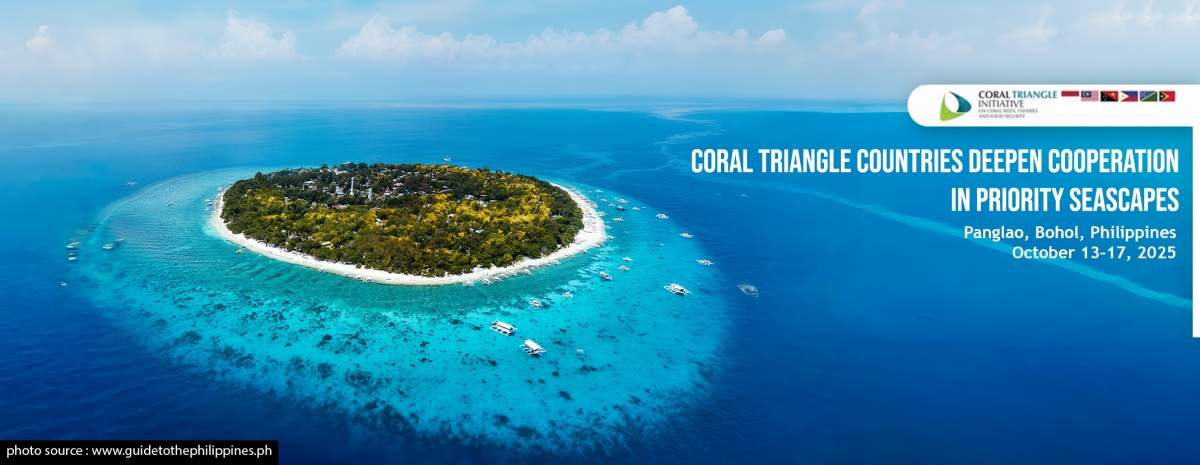
Coral Triangle Countries Deepen Cooperation in Priority Seascapes
Panglao, Bohol, Philippines – In a major step forward for regional marine cooperation, over 60 participants representing the CT6 members, Government Officials, and CTI partners, gathered for a week-long series of high-level meetings and technical exchanges to reinforce transboundary collaboration in the Coral Triangle Initiative on Coral Reefs, Fisheries and Food Security (CTI-CFF) priority seascapes.
Held from October 13–17, 2025 at the Bellevue Resort and KEW Hotel in Bohol, Philippines, the sessions were convened under the unifying theme: "Looking Back to Move Forward: Strengthening Transboundary Cooperation in the CTI-CFF Priority Seascapes."
The agenda featured a range of collaborative forums, including:
CTI-CFF Seascape and Ecosystem Approach to Fisheries Management (EAFM) Regional Exchange
- 1st Dialogue of the Sub-Regional Sulu-Sulawesi Seascape (SSS)
- 2nd Lesser Sunda Seascape (LSS) Dialogue
- 2nd Bismarck Solomon Seas (BSS) Dialogue
- 8th Seascapes and 10th Ecosystem-approaches to Fisheries Management (EAFM) Technical Working Group Meetings
Seascapes, as defined by CTI-CFF, are large, multiple-use coastal and marine areas where governments, communities, and other stakeholders cooperate to manage them for sustainable development and human well-being, as well as for biodiversity conservation. Seascapes are defined using a scientific and strategic approach to facilitate collaboration and coordinated management efforts. The Coral Triangle region’s three designated priority seascapes—Sulu-Sulawesi Seascape, Bismarck-Solomon Seas Ecoregion, and Lesser Sunda Seascape—serve as regional models for transboundary marine management.
Mr. Isidro M. Velayo, Jr., Assistant Director for Technical Services, NCC Philippines, DA Bureau of Fisheries and Aquatic Resources, opened the event by emphasising its significance: “This event is more than a convergence of technical expertise. It’s a reaffirmation of our collective responsibility to safeguard one of the most biologically diverse and economically vital marine regions on Earth, the Coral Triangle (CT) region. The seas that connect us remind us that collaboration is not merely an option, it is imperative.”
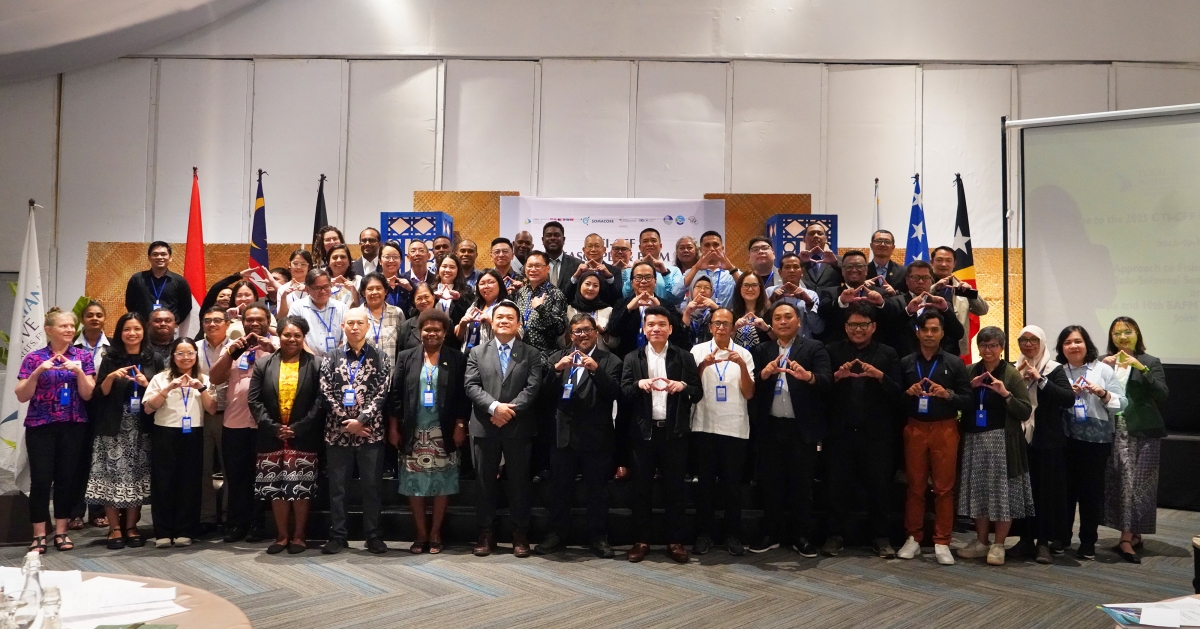
Highlights from the Week
- CTI-CFF Seascape Regional Exchange (October 13–14):
Participants shared lessons from the three priority seascapes and explored mapping of marine management efforts, challenges, and best practices. Sessions covered ecosystem approaches to fisheries management (EAFM), ecologically or biologically significant marine areas (EBSAs), the COASTFISH framework, and capacity building roadmaps.
- Learning Visit in Panglao (October 15):
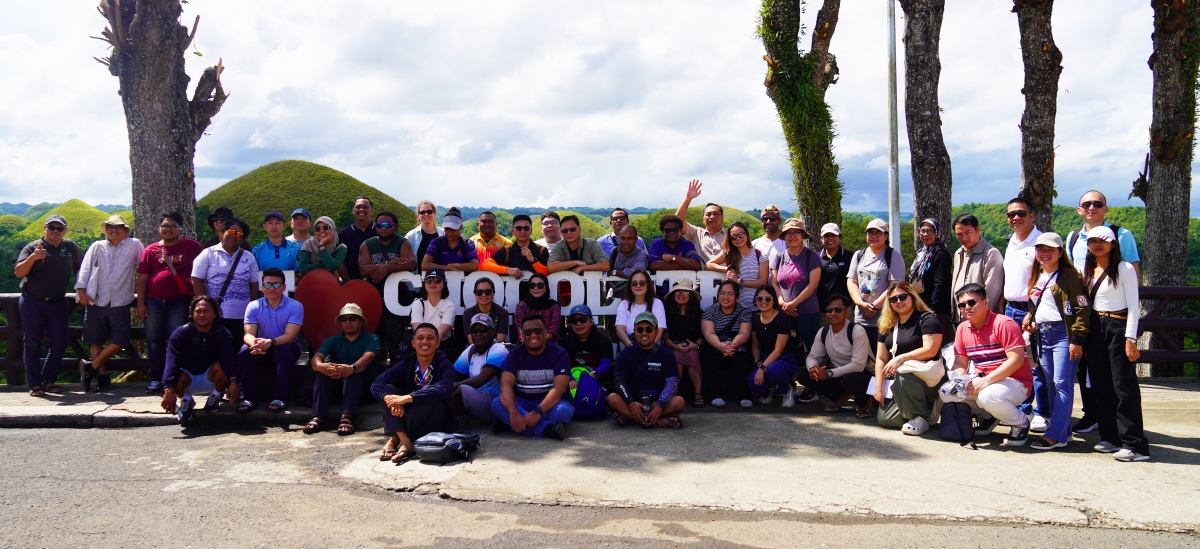
Delegates and participants visited iconic sites including the Chocolate Hills, Tarsier Sanctuary, and Asin Tibuok to connect with local communities and witness first-hand the critical links between biodiversity conservation and sustainable harvesting and livelihoods. These sites highlighted the importance of integrated approaches that protect both land and sea for future generations.
- First Sulu-Sulawesi Seascape (SSS) Dialogue (October 16):
For the first time, representatives from Indonesia, Malaysia, and the Philippines came together in a formal dialogue to shape a shared vision for the SSS, prioritised national and transboundary governance mechanisms, coral and fishery data integration, and connectivity metrics in marine spatial planning. Regional initiatives such as the Blue Corridor, SEACONNECT, and SOMACORE were presented by development partners including WWF, CI-GEF, GIZ, and WCS.
“This week’s agenda invites us to look back and revisit the origins of the seascapes. But it also provides space to jointly redefine our collaboration under the CTI-CFF seascapes approach into the future. I invite us to further build on those areas of regional cooperation, identify new ones and reflect those opportunities in our respective National Plans of Action and other Technical Working Groups,” said the chair representative of the Seascapes Working Group, Mr. John Erick Avelino from the Department of Environment and Natural Resources-Biodiversity Management Bureau.
Key outcomes included updating the LSS Sub-Group structure and initiating a coordination mechanism between Indonesia and Timor-Leste. A joint work plan was also drafted, focusing on:
- Marine migratory species protection
- MPA network development
- Small-scale fisheries management
- Academic and research partnerships
- Second Bismarck Solomon Seas (BSS) Dialogue (October 16):
Participants agreed to revisit the 2006 Trilateral MoU (Indonesia–Papua New Guinea–Solomon Islands) and initiated planning for a regional profiling and communications strategy.
- 8th Seascape and 10th EAFM Technical Working Group Meeting (October 17):
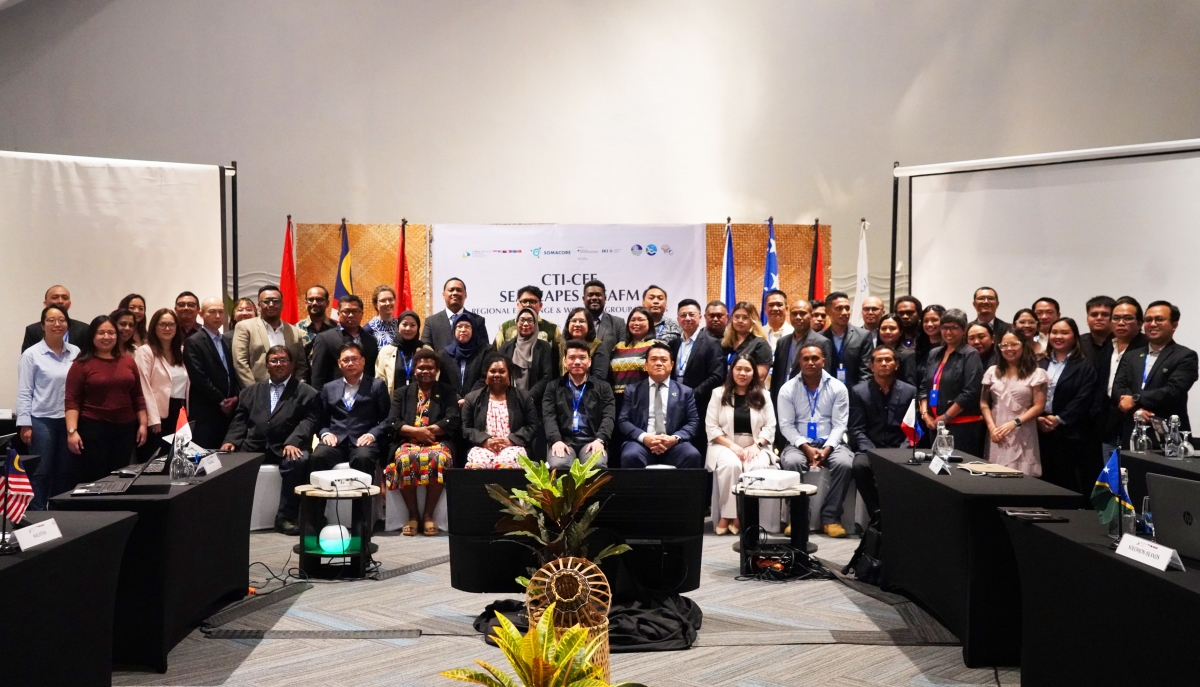
The Coral Triangle Initiative on Coral Reefs, Fisheries and Food Security (CTI-CFF) convened its 10th Ecosystem Approach to Fisheries Management (EAFM) and 8th Seascape Technical Working Group (TWG) Meeting in Bohol, Philippines, marking a pivotal moment for regional collaboration in sustainable marine resource management.
Delegates from the CT6 member countries Indonesia, Malaysia, Papua New Guinea, the Philippines, Solomon Islands, and Timor-Leste—joined development partners and the CTI-CFF Regional Secretariat to review progress, endorse strategic plans, and strengthen coordination across fisheries and seascape initiatives. The meeting was co-chaired by Ms. Rachel Rabi (Papua New Guinea) for EAFM and Mr. John Erick Avelino (Philippines) for Seascapes.
Key outcomes included endorsement of the 2026 Workplans and Budgets for both TWGs, recommendations for SOM-20, and formal turnover of TWG leadership roles for 2026–2027. The Philippines and Solomon Islands were nominated as incoming Chairs for EAFM and Seascapes respectively, pending SOM-20 approval.
The meeting celebrated the successful back-to-back Regional Exchanges hosted by the Philippines, supported by SOMACORE Programme Consortium Partners. These exchanges catalyzed dialogue on Blue Economy opportunities, sub-seascape coordination, and ecosystem-based management. Sub-group dialogues for the Sulu-Sulawesi, Lesser Sunda, and Bismarck Solomon-Seas Seascapes were acknowledged, with interim workplans endorsed for implementation.
The TWGs tasked the Regional Secretariat with advancing sustainable finance mechanisms, updating sub-seascape profiles, and facilitating future exchanges on Marine Spatial Planning, Ecologically and Biologically Significant Areas (EBSAs), and Leatherback Turtle conservation. Timor-Leste’s request to revise terminology and mapping references in official documentation was also noted.
The meeting concluded with appreciation to the Government of the Philippines and development partners for their support, reaffirming CTI-CFF’s commitment to integrated, inclusive, and science-based marine governance across the Coral Triangle.
Looking Ahead: From Planning to Impact
Participants endorsed several key outputs:
- Barriers and opportunities in strengthening transboundary seascape cooperation
- Seascape resource mapping and needs assessments
- Outline for Seascape information profiles
- A preliminary Roadmap for the Sulu-Sulawesi Seascape Action Plan
“As representatives of the Coral Triangle countries, we understand that the long-term health of our oceans depends on integrated, cross-sectoral approaches — and seascapes and EAFM are two key pillars in that strategy. Let us take this time to listen, to share, and to build on the solid foundation that the CTI-CFF has laid over the years. Our success depends on the strength of our partnerships, the voices of our communities, and our willingness to take bold, coordinated action,” said chair representative of the Ecosystem Approach to Fisheries Management (EAFM), Ms. Rachel Rabi, Acting manager, ecosystem monitoring of the Fisheries Management Business Group, PNG NFA.
Participants expressed strong support for scaling up integrated governance approaches and ensuring the alignment of national actions with CTI-CFF’s Regional Plan of Action 2.0 (RPOA 2.0).
Within the CTI-CFF Regional Plan of Action 2.0, Goal 1 calls for priority seascapes to be effectively managed: ‘By 2025, coastal communities and coastal and marine ecosystems are enabled to cope with the impacts of climate change, natural and anthropogenic threats, in the Coral Triangle region, due to measurable increased regional collaboration between the CT6 and our partners for the implementation of the RPOA 2.0, facilitated through a strong and effective CTI-CFF.’
Goal 2 envisions the full application of ecosystem-based fisheries management (EAFM): ‘By 2030, coastal communities and coastal and marine ecosystems in the CT region are more resilient and able to adapt to impacts of climate change, natural and anthropogenic threats, by improving food security, sustainable fisheries, and coastal livelihoods.’
These two goals are deeply interconnected. Effective seascape management provides the spatial foundation for EAFM, while EAFM ensures that fisheries remain productive and sustainable within those seascapes. “This series of engagements demonstrates that cooperation is not only possible—it is already happening,” said Mr. Christovel Rotinsulu, Deputy Executive Director for Programme Service, speaking on behalf of Dr. Frank Griffin, Executive Director of the CTI-CFF Regional Secretariat. “Now, we must ensure that the structures, resources, and political will are in place to move from planning to lasting impact.”
###
Note to media: Quotes included in this release are attributable to the individuals named and should not be attributed to the media contact listed below. For interview requests or further comment, please coordinate with the CTI-CFF Regional Secretariat.
About the Coral Triangle Initiative on Coral Reefs, Fisheries and Food Security (CTI- CFF)
The Coral Triangle Initiative on Coral Reefs, Fisheries and Food Security (CTI-CFF) is a multilateral partnership of six countries—Indonesia, Malaysia, Papua New Guinea, the Philippines, Solomon Islands, and Timor-Leste—working together to protect the Coral Triangle, the global epicenter of marine biodiversity. Often called the “Amazon of the Seas,” the Coral Triangle is home to 76% of the world’s known coral species (over 600 species of reef-building corals) and 37% of the world’s reef fish species, supporting the livelihoods and food security of more than 130 million people.
Through its Regional Plan of Action (RPOA 2.0), CTI-CFF drives regional collaboration to conserve coral reefs, expand marine protected areas, ensure sustainable fisheries, and build resilience to climate change. The CTI-CFF Regional Secretariat, based in Manado, Indonesia, coordinates this collective effort—bringing together governments, partners, and communities to advance a healthy, resilient, and inclusive blue economy across the Coral Triangle.
For more inquiries & information, contact:
Fritzgerald Wenur, Marketing & Information Officer, CTI-CFF Regional Secretariat
E: fritzgerald.wenur@cticff.org // www.coraltriangleinitiative.org
Kimberly Christine Chung, Communication & Information Manager, CTI-CFF Regional Secretariat
E: kimberly.chung@cticff.org // www.coraltriangleinitiative.org
AddToAny